
Market Cycles
SpaceX wants to raise $75 billion. Is the valuation too ambitious?
SpaceX is targeting a US$1.75 trillion IPO, more than double what some analysts say it’s worth. Here is what that means for markets, and where the opportunity actually sits.
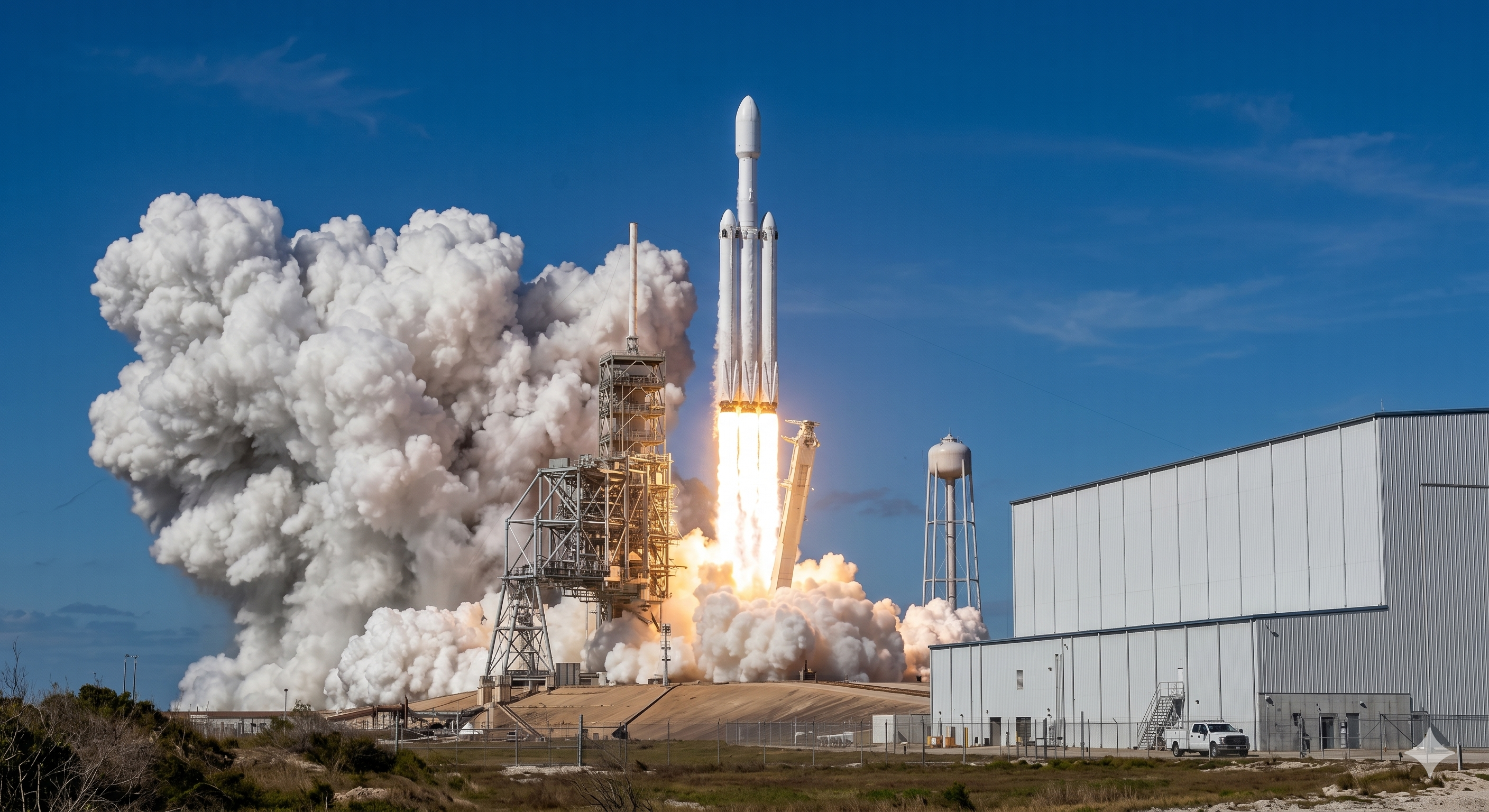
You’ve probably heard of SpaceX. It launches rockets, runs Starlink, and has become one of Elon Musk’s most important companies. Now, SpaceX is preparing for what could be the biggest IPO ever. Beyond the headline number, what does this actually mean for markets and investors?
According to Reuters, SpaceX is targeting a valuation of around US$1.75 trillion in a planned IPO, while aiming to raise about US$75 billion through the sale of new shares. For context, an IPO is when a private company sells shares to public investors for the first time. If the deal goes through at that valuation, SpaceX would immediately become one of the most valuable listed companies in the world. The company is reportedly planning to price its shares at US$135 each, selling around 555.6 million shares, in what is expected to be an all-primary offering. That means the money raised would mainly go to SpaceX itself, instead of existing shareholders simply cashing out.
The issue is not whether SpaceX is impressive. It clearly is. The concern is whether investors are being asked to pay too much, too early. Morningstar analysts reportedly valued SpaceX at around US$780 billion, less than half of the IPO valuation SpaceX is targeting. That gap matters because it suggests some analysts think the company’s public-market ambitions are running ahead of what its current financials can justify. SpaceX also posted a US$4.94 billion net loss in 2025, even though revenue grew 33% to US$18.67 billion. In simple terms, the company is growing quickly, but it is still burning a lot of money.
The old SpaceX story was mainly about rockets and Starlink. The new story is much bigger. SpaceX is increasingly being pitched as a company tied to AI infrastructure, satellite internet, reusable rockets, Mars ambitions, and even possible future space-based data centres. That sounds exciting, but it is also extremely expensive. Building rockets, satellites, AI data centres, and future space infrastructure requires huge upfront capital. Investors are not just funding what SpaceX is today. They are funding what SpaceX says it can become.
For now, SpaceX is not yet a normal public stock that retail investors can simply access. But the broader opportunity sits in what has to be built around companies like SpaceX: semiconductors, cloud infrastructure, AI data centres, satellite components, launch supply chains, and communications infrastructure. That is why investors often look at ‘picks-and-shovels’ companies, the firms providing the tools, chips, equipment, cloud services, and infrastructure that high-growth companies need to build their future. In the AI and space economy, the obvious beneficiaries may not always be SpaceX itself. They could be the listed suppliers and infrastructure companies that benefit from higher spending across AI, satellite connectivity, and computing.
This IPO is also about more than one company. It shows how public markets are being asked to value extremely ambitious private tech companies. In the past, public investors usually got access to companies earlier in their growth journey. Today, many of the biggest tech companies stay private for much longer. By the time they finally list, much of the early upside may already be priced in. SpaceX is a perfect example. It has already become a giant private company before retail investors can participate directly. So when it finally comes to market, investors face a harder question: are they paying for future growth, or are they paying too much for growth that has already been anticipated?
There is also an index angle. SpaceX had hoped for early inclusion into major indexes, but S&P Global kept its rules unchanged, making quick entry into the S&P 500 unlikely because SpaceX does not currently meet the profitability requirement. That matters because index inclusion can create forced demand from passive funds. Without immediate S&P 500 inclusion, SpaceX may have to rely more heavily on genuine investor demand rather than automatic index demand.
This is not the same as saying SpaceX is a bad company or that the IPO will fail. SpaceX has real businesses, real revenue, a dominant position in private space launches, and Starlink has become a major satellite internet platform. The company has also proven that it can execute on extremely difficult engineering problems.
But valuation still matters. A great company can still be a risky position if the price is too high. At a US$1.75 trillion valuation, investors are not just paying for rockets and Starlink today. They are paying for AI, Mars, space data centres, and other future opportunities that may take years to fully materialise.
The opportunity here is not just SpaceX itself. It is everything that has to be built around it. For investors, the key question is whether SpaceX’s future can grow into its valuation. The company is clearly one of the most important names in the space economy, but the IPO target also requires investors to believe in a very big future. SpaceX is trying to raise money like a company that has already conquered the next decade. Investors now have to decide whether that future is realistic, or whether some of the excitement has already been priced in.
Sources
- https://www.reuters.com/legal/transactional/spacex-targets-175-trillion-valuation-including-greenshoe-option-record-ipo-2026-06-02/
- https://www.reuters.com/legal/government/spacex-sets-135-price-blockbuster-ipo-upending-wall-street-convention-2026-06-03/
- https://www.straitstimes.com/business/companies-markets/this-research-firm-says-spacex-is-worth-less-than-half-its-2-27-trillion-ipo-target
- https://www.reuters.com/business/finance/sp-global-keeps-fast-entry-proposal-unchanged-spacex-listing-looms-2026-06-04/
- https://www.reuters.com/legal/transactional/bound-mars-elon-musks-spacex-unveils-filing-blockbuster-ipo-2026-05-20/
Education only, not financial advice.
Articles on the StarryTrader blog are written for informational and educational purposes. Nothing here is investment advice, a recommendation, or a solicitation to transact. Do your own research, and consider speaking to a licensed financial adviser before making any investment decision.
Keep reading